
My coffee is still cold in the mug when I notice my stomach hasn't made a single complaint all morning — no gurgle, no tight ache, nothing. That kind of quiet still catches me off guard. For years my gut health ran on a schedule of stress and short notice, and the capsule bottles I bought to fix it spent more time gathering dust in a cabinet than they did in my mouth, because I could never get one down without gagging. Somewhere between grading spelling tests and chaperoning indoor recess as a fourth-grade teacher, gummy vitamins pulled me out of that cycle, and PrimeBiome is the bottle currently sitting in the rotating lineup on my kitchen table.
Quick disclosure before we go further — some of the links below are affiliate links, and if you buy through one I earn a small commission at no extra cost to you. Three years into testing nearly every gut health gummy that crosses my kitchen table, I still lead every post with the same reminder: I'm not a doctor, a dietitian, or a scientist. I'm a public school teacher with a sensitive stomach and a stack of bottles I grade like homework, so please talk to your own healthcare provider before changing your routine. Think of this as a real PrimeBiome review built around the questions people actually ask me, not a highlight reel.
Gummy Vitamins vs. Capsules: The Real Delivery Difference
Capsules and gummies are not the same product wearing different outfits — the format changes what's actually possible inside the bottle. A capsule is a shell you swallow whole, so the manufacturer doesn't have to worry about flavor, texture, or how bacteria hold up once they're mixed into something chewy. A gummy has to survive being set into a sticky base of pectin, sweeteners, and flavoring before it ever reaches your mouth, and not every probiotic strain tolerates that process equally well. That tradeoff is the whole story: capsules can sometimes pack in a wider range of strains with less fuss, while gummies sacrifice a bit of formulation flexibility for the one thing that actually matters if you never take your supplements — you'll take them. I settled on a two-month run with PrimeBiome because it was built specifically to work within that gummy format rather than treating it as an afterthought, and I'd read enough about the gut-brain axis to wonder whether calming my stomach might take some of the edge off a stressful school week too.
Gagging on Capsules Is What Started My Search
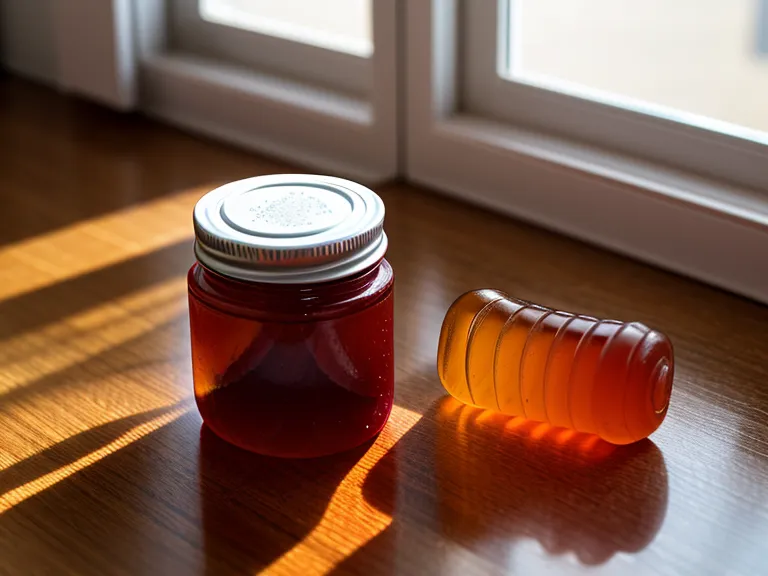
Swallowing was never the easy part for me, and every bottle of capsules I bought came with good intentions and ended the same way — stuck halfway down my throat, or spit back into my palm because my gag reflex refused to cooperate. I tried hiding them in yogurt, tried the full-glass-of-water trick, tried holding my breath and just pushing through, and none of it stuck past a week or two. A bottle I never finish is money I've essentially thrown away. Odessa Barnwell, a PTA parent from my school who emails me whenever she has a supplement question, has told me the same thing about herself — she's been pill-phobic since childhood, to the point that even a chewable aspirin was a struggle. When I looked at GUT VITA as a budget option, the ingredient list was genuinely solid and the price was hard to argue with, but it's a capsule, and I already knew how that story ends for someone like me. If afternoon bloat is the bigger issue for you rather than the swallowing itself, I've written a separate breakdown here: Best Probiotic Gummies for Busy Teachers Dealing with Afternoon Bloat. Format isn't a minor preference, though. For a certain kind of stomach and a certain kind of stubbornness, it's the whole decision.

Great Taste Doesn't Always Mean It's Working
Not even close, and I learned that one the expensive way. Before I found a routine I trusted, I tried a bright, fruity gummy that tasted like something from the candy aisle — genuinely delicious, easy to remember, no complaints there. Weeks went by while I waited for the digestive changes I'd read about, and nothing happened. Not better, not worse, just the same stomach I'd always had. When I finally sat down and graded the label the way I'd grade a rough draft, I understood why: the supplement facts panel was mostly sugar and gelatin, with the actual probiotic content buried in small print and a CFU count — that's the tally of live cultures packed into each dose — that was unimpressive at best. Probiotics and prebiotics get confused constantly too, since the probiotic is the living culture and the prebiotic is closer to its fuel, and a label leaning hard on one term while burying the other is worth a second look. A pleasant taste tells you whether you'll finish the bottle. It tells you nothing about whether the bottle is doing anything once it's gone. The microbiome research on regularity and digestion is genuinely interesting, but taste and packaging will never substitute for it.
Too Much Fiber Backfired Fast
Fiber gummies convinced me that more had to be better, and that assumption cost me a genuinely uncomfortable stretch. I'd been taking my regular probiotic gummy and decided to layer in a fiber gummy on top without easing into it, figuring my system could handle a little extra push toward regularity. It didn't take long before I was uncomfortably bloated in a way that made sitting through a staff meeting genuinely miserable, and it took a run of uneasy days before things settled back to normal. Soluble and insoluble fiber behave differently once they're in your system, and stacking a full serving of either on top of an already-active routine is exactly how you end up gassy instead of regular. SynoGut leans heavily on a fiber-forward capsule formula, and it's a genuinely well-regarded option if fiber is your main goal — I wrote a longer breakdown of how it stacks up here: Grading SynoGut: Does This Natural Formula Pass the Sensitive Stomach Test?. The lesson stuck with me either way: introduce one new supplement at a time, and give your system real space before adding the next variable.

Heat Can Ruin Probiotic Gummies
Yes, and I found out the hard way after a Target run turned into a longer errand than planned. I left a fresh bottle in the car on a warm afternoon while I ran more errands, and came back to gummies that had partially melted into each other, soft and misshapen at the bottom of the bottle. Probiotics are living organisms, not inert vitamins, and heat is not kind to them. I didn't trust that the cultures had survived intact, so the whole bottle went in the trash rather than risk taking something that had essentially been cooked in a parked car. Now every bottle I test lives on a cabinet shelf away from direct sun, never on a counter and never in a bag left anywhere warm. It's a small habit, but it's the difference between a supplement that's still alive when you take it and one that's just an expensive gummy.
Misreading the Serving Size Cost Me a Rough Week
A new bottle landed on my kitchen table, its cap giving way with that stiff snap of a safety seal breaking for the first time, and I assumed the serving size would match every other bottle I'd tested — one gummy, done. It didn't. The fine print specified two gummies per serving, and I'd been taking what I thought was a normal dose but was actually half of it for several days before I caught the mistake, then, embarrassingly, overcorrected by doubling up to "catch up," which left my stomach in open revolt for days afterward. Reading a supplement label closely is not optional, especially with added sugars hiding in places you wouldn't expect — I put together a full guide on that after enough close calls of my own: Reading the Label: How to Spot Added Sugars in Gummy Probiotics (2026 Update). Digestive enzymes and probiotics get lumped together on shelves too, even though they're solving completely different problems, which makes careful label reading even more important than it looks. Treat the back of the bottle like a syllabus. Skimming it is how you end up grading yourself on the wrong assignment.
Knowing When Your Gummy Probiotic Is Working
That quiet-stomach morning I mentioned earlier is the clearest answer I have — the absence of a problem, not a dramatic before-and-after. Regularity that doesn't require planning around it, dinners that don't end with a change into looser pants, afternoons that don't come with that familiar tight, inflated feeling — those are the actual signals, and they show up gradually rather than all at once. Frieda Castellanos, who teaches next door to me and treats every wellness trend like a pop quiz she's determined to fail on purpose, asked me flat out how I could tell this wasn't just a placebo. My honest answer: I can't run a controlled study on myself, but a pattern that holds for weeks at a time across normal, stressful, and travel-heavy stretches is more convincing than any single good day. Leaky gut theory gets thrown around a lot in this space, and while I won't pretend to be the expert on the mechanism, it's part of why I care so much about consistent regularity in the first place. My kitchen table has turned into a small testing station at this point — a lazy Susan of open bottles, a strip of light clipped under the cabinet so I can actually read fine print without holding a bottle up to a window, and a sticky note on the fridge where I keep a running grade for whatever I'm currently testing.
Grading the Price Tag: Gummy Versus Capsule Value
Value is where this gets genuinely complicated, and it's worth separating from taste and format entirely. At around seventy dollars, PrimeBiome is not the cheapest option on the shelf, and it costs more than the generic gummy brands I used to browse at Costco without buying. A bottle you finish, though, is worth more than a bottle you abandon, and the consistency grade matters as much as the price tag when you're calculating actual cost per dose. GUT VITA, at around fifty dollars, is the harder bargain on paper, and the ingredient list holds up — the catch, again, is the capsule format that sent me looking elsewhere in the first place. Digestion has been the strongest grade in this whole experiment: noticeably less bloating, more predictable timing, and dinners I can eat without immediately regretting it. Consistency earns close to a perfect mark too, simply because I've never once dreaded taking these the way I dreaded capsules. Value lands somewhere in the middle — a genuine investment, not an impulse buy, and one that only pays off if you actually finish the bottle instead of letting it join the graveyard of half-used supplements in the back of the cabinet.
The Final Verdict on the 60-Day Switch
So here's the actual answer, the one I'd give a colleague cornering me at lunch: if you've abandoned capsules more than once because you physically cannot get them down, the format switch alone is worth testing, independent of which specific brand you choose. Read the serving size like you're checking a syllabus before assuming you already know the rules, introduce one new supplement at a time instead of stacking several at once, and give any new bottle real time before you grade it, because gradual change is the norm here, not the exception. That's the same thing I told Odessa when she finally worked up the nerve to try her first gummy bottle instead of another swallow-and-wince capsule, and it's the same standard I hold every bottle on my kitchen table to, including PrimeBiome. Consider this the report card: not a magic fix, not an overnight transformation, just steady, gradable progress for a stomach that spent years failing every capsule it was handed.