
My thumb is already three bottles deep into the probiotic gummy shelf at the Target inside Highlands Ranch Town Center, checking each label for what comes before the sugar. Twenty-some years of grading student work does something to a person: you stop trusting the glossy cover and go straight for the substance underneath. That's exactly why I keep circling back to gut health supplements, gummy and capsule both, even though I'm just a teacher with a weak stomach and a well-documented Target habit. Here's the myth this supplement review needs to correct before we get anywhere near SynoGut: more probiotic strains, more CFUs, more daily servings — none of it guarantees a calmer gut, and chasing that number is where most long-term digestive support plans go wrong.
A quick note before the grading begins: I'm a teacher, not a doctor or a dietitian, and I don't have any letters after my name that would suggest otherwise. Some of the links below are affiliate links, meaning I earn a small commission if you buy through them, at no extra cost to you. I only write about gut health supplements I've actually kept on my own kitchen table long enough to form an opinion, and nothing here replaces a conversation with your own doctor, especially if your stomach is as opinionated as mine.
The Myth That More Probiotics Always Wins
Walk into any gut health forum, or honestly just the probiotic aisle, and you'll hear some version of the same claim: your stomach is unhappy because you don't have enough good bacteria in it yet, so add more, in more forms, more often. Gummy probiotics lean on this hard, because a chewable is an easy daily habit to sell. Capsule brands lean on it too, just with bigger numbers on the label. The actual rule I've landed on after grading a lot of these bottles is less exciting: for people with an irregular schedule and a sensitive gut, fiber and consistency do more heavy lifting than strain count ever will. If your gut problem shows up as bloating, sluggish regularity, or that tight afternoon heaviness, more probiotic without more fiber is often just feeding a symptom instead of fixing the traffic jam underneath it.
One trendy gummy brand is a good example of how this myth sells bottles. I put a decent chunk of my classroom-supply budget into it, expecting a virtuous little upgrade to my mornings. The first three ingredients were corn syrup, sugar, and water, and by second period most days I was riding a sugar crash instead of feeling any calmer. Grading that label with an actual red pen felt like catching a student who padded an essay with big words and no argument underneath — plenty of probiotic culture claims on the front, plenty of sugar doing the real work on the back.

Three Months of Greek Yogurt, Zero Change
Long before gummies entered the picture, I tried fixing things the boring, doctor-approved way: a daily container of Greek yogurt, every single morning, for three solid months. No skipped days, no substitutions. My stomach at the end of those three months behaved exactly like it did at the start of them. Nothing got worse, but nothing got better either, and that's the part nobody warns you about — a failed intervention doesn't always announce itself with a dramatic reaction. Sometimes it just quietly does nothing while you keep buying yogurt out of stubbornness.
Sondra Whitmore, who runs our school library and forwards me an NIH fact sheet practically every time gut health comes up over lunch, was the one who finally said the obvious thing out loud: a food you already eat every day isn't an experiment, it's a habit, and three months of a habit that isn't changing anything is data, not bad luck.
Grading SynoGut Against the Fiber Question
That conversation with Sondra is roughly when SynoGut landed on my kitchen table, on the same round oak table where I keep a small rotating tray of whatever bottle I'm currently testing. Unlike the candy-shelf options, this one leads with fiber instead of flavor: Psyllium husk, bentonite clay, and black walnut hull, in that order, which already tells you where the formula's priorities sit. I read the fine print under the strip of LED lighting I've got tucked under the cabinets for exactly this purpose, because supplement labels are basically eight-point font designed to be skimmed, not read.
There's a sticky note on my fridge with my own grading rubric on it — ingredient order, sugar content, and whether the marketing matches the label — and SynoGut is one of the few capsule formulas that's cleared all three columns without an asterisk.
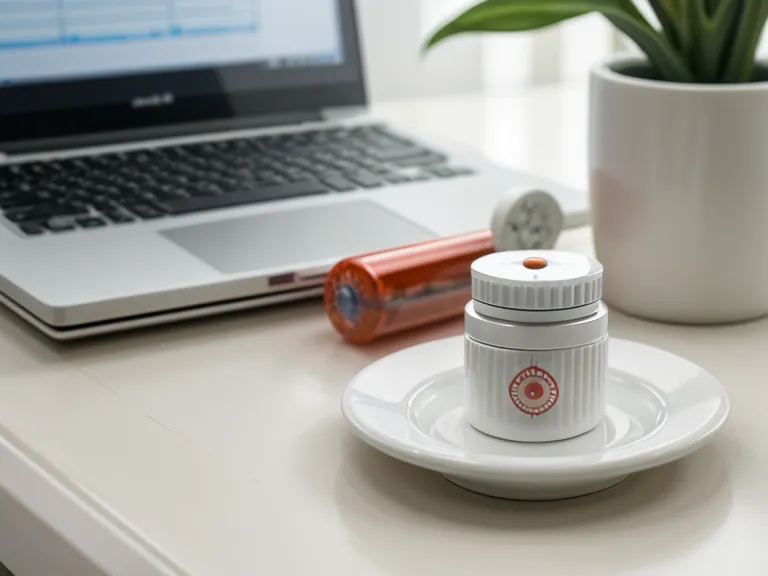
The actual swallowing part still took some talking myself into. That first morning felt more serious than any gummy ever had, capsule and all, and I told myself that a person who can hold the attention of 28 ten-year-olds through a fraction lesson can manage two capsules without theatrics. That turned out to be true.
If you want the ingredient-by-ingredient version of that first trial, I broke it down separately in Grading SynoGut: Does This Natural Formula Pass the Sensitive Stomach Test?
Does Capsule vs. Gummy Actually Matter?
Here's the thing about my own site's usual argument: I built this whole project around gummies because I hate swallowing pills, and I still think format matters for whether you'll actually take something daily. But format isn't the same question as effectiveness, and conflating the two is its own small myth. I've covered the mechanics of that capsule-versus-gummy tradeoff elsewhere, so I won't re-litigate it here beyond saying this: the best supplement is the one whose ingredient list holds up, in whichever shape gets it into your mouth.
Garvey Tsai, a reader who comments on nearly everything I post and once corrected a strain name I'd gotten sloppy about, has told me more than once that he'll take a well-formulated capsule over a mediocre gummy every time, sugar or no sugar. He's not wrong, and SynoGut is a decent example of his point — a formula that earns its grade on fiber content rather than on being fun to chew.
The bigger issue standard gut advice ignores is that most of it assumes a predictable day: three balanced meals, a consistent bedtime, time to prep a probiotic-rich dinner. My days are built out of twenty-minute lunch breaks and a bell schedule I don't control, and a neighbor of mine who drives long-haul routes has it even worse — bathroom access on the interstate is a genuine logistical puzzle, not a metaphor. Advice that only works for someone with a flexible kitchen and a flexible bladder isn't advice, it's a lifestyle requirement disguised as a supplement tip. That's part of why I compared formulas head to head in SynoGut vs Daily Fiber Gummies for Better Bowel Regularity — regularity has to survive a schedule you don't get to design.
Reading a Gut Label Like a Report Card
Pop quiz, because grading things for a living has a way of leaking into every corner of teacher life, even the supplement drawer: do you know whether the bottle in your hand is a probiotic strain or a prebiotic fiber meant to feed one that's already in your gut? Most labels don't make the distinction obvious, even though probiotic and prebiotic are doing genuinely different jobs. Same with the CFU count printed in tiny font near the bottom of the label — a bigger number isn't automatically a better grade, and I'd rather see a modest count from a formula that's honest about it than an inflated one buried under marketing copy.
Added sugar is the sneakier trap, since it hides under a dozen names that don't sound like sugar at all, and I've caught more than one "gut health" gummy smuggling in more of it than the fruit snacks in my classroom's reward drawer. There's also a real difference between soluble and insoluble fiber that most labels never bother explaining, and whether a formula leans one way or the other changes how it behaves in your system, not just on the ingredient panel.
Some brands lean hard on "leaky gut" language to sell their fix, and while I'm not going to play doctor and explain what's actually happening at the cellular level, I'd treat any bottle promising to repair your gut lining overnight with the same skepticism I'd give a student who claims they wrote a five-page essay during a single commercial break.
GUT VITA is the more affordable entry point I tried first, a smaller commitment than SynoGut with a straightforward ingredient list that doesn't require a chemistry degree to look up. Midday gas and bloating, though, is actually a different question than the one this article is answering; probiotics and digestive enzymes solve different problems, and I get into that difference in Best Digestive Enzymes for Gas and Bloating Relief During the Workday.

The Real Report Card on Long-Term Support
I buttoned my navy slacks after lunch not long ago and realized, walking back to my classroom, that there was nothing pressing against the waistband — no afternoon swell, no mental note to loosen my belt before the last bell. That's not dramatic, and it won't show up on any chart, but it's exactly the kind of quiet, boring consistency that fiber and regularity deliver and flashy probiotic counts usually don't.
So here's the corrected rule, in place of the myth I opened with: don't grade a gut supplement on how many probiotic strains it lists or how fun it is to chew. Grade it on whether it supports regular, predictable digestion on a schedule you don't control, because that's the actual problem most of us with sensitive stomachs are trying to solve. On that rubric, SynoGut earns a solid mark for fiber content and consistency, even though it will never win a taste test against a gummy.

For readers who still want the gummy format and aren't ready to give it up completely, I keep PrimeBiome on my desk as the honors-track option — a multi-strain gummy blend with a 90-day refund window that gives you enough time to actually test whether it works instead of guessing.
Grading candy-flavored promises gets old fast. If you want something that treats regularity as the actual assignment, SynoGut is worth a spot on your morning list, not because it's flashy, but because it does the unglamorous fiber work most gummies skip. Whatever you land on, don't let a cute bottle talk you out of reading the label first.